
Direct Acting Solenoid Valve: Principle, Sizing and When to Use It
A direct acting solenoid valve opens and closes the orifice using only the magnetic force of the coil, with no pilot pressure required. This makes the direct acting type the right choice for low-flow, vacuum, and fail-safe duties. In this guide, we explain how a direct acting solenoid valve works, compare it with pilot-operated designs, and list the selection rules that matter on automated lines.
What Is a Direct Acting Solenoid Valve?
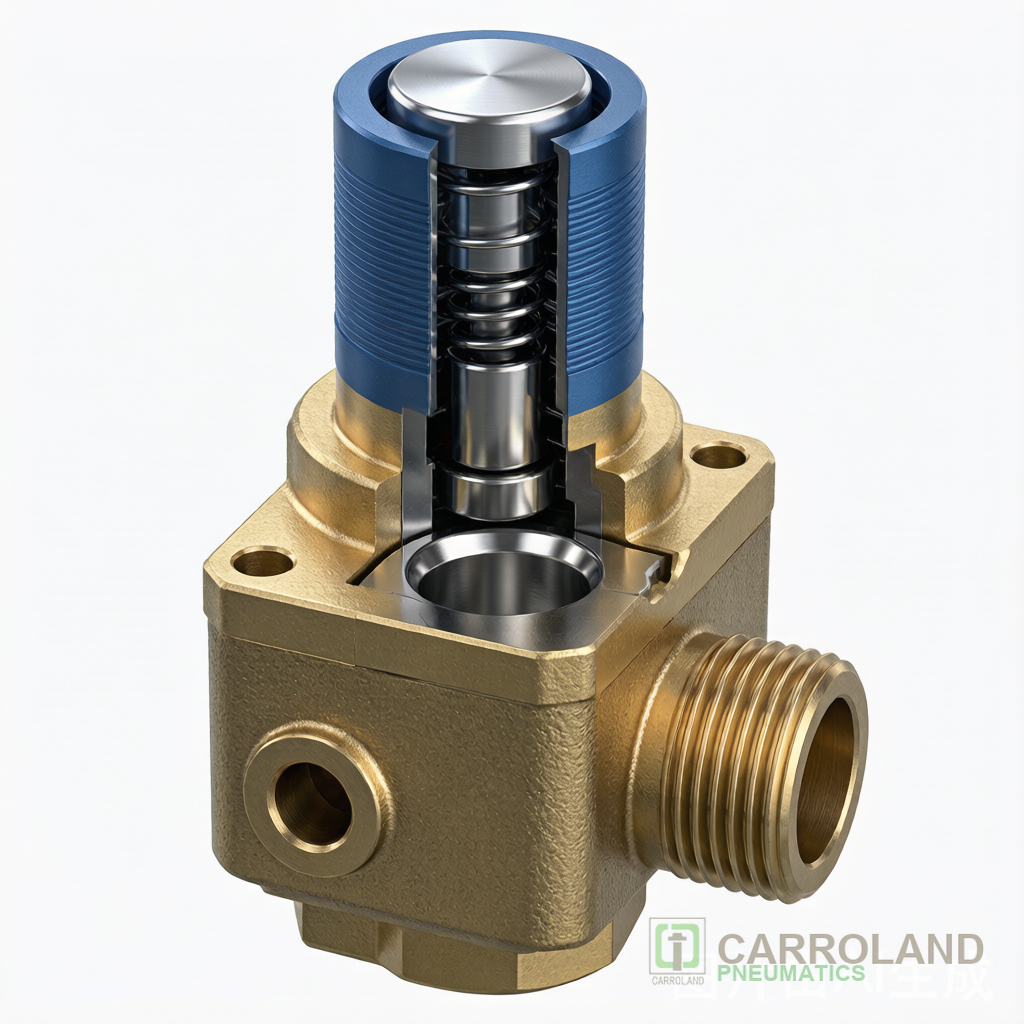
A direct acting solenoid valve has the plunger directly attached to the sealing disc. When the coil energizes, the magnetic pull lifts the disc off the seat and flow begins immediately. Because no upstream pressure assists the motion, the valve works from zero bar and even under vacuum. In contrast, a pilot-operated valve needs line pressure to shift the main spool. As a result, the direct acting design is the only choice when pilot pressure is absent.
How a Direct Acting Solenoid Valve Works
The sequence is simple. First, the de-energized spring holds the disc on the seat. Then, coil current creates a magnetic field that pulls the plunger against spring force. Finally, the orifice opens for as long as current is applied. Specifically, response time stays short, often under 10 ms, because the moving mass is tiny. As a result, direct acting valves suit fast dosing and sampling.
Direct Acting vs Pilot Operated
The main trade-off is flow capacity versus pressure range. For example, direct acting valves handle small ports, up to roughly 3 mm, at any pressure including zero. Meanwhile, pilot-operated valves manage larger flows but cannot shift without sufficient line pressure. The table summarizes the difference.
| Factor | Direct Acting | Pilot Operated |
|---|---|---|
| Minimum pressure | 0 bar (works at vacuum) | Needs line pressure |
| Typical port size | ≤ 3 mm | ≥ 4 mm |
| Response speed | Very fast | Moderate |
| Best use | Dosing, vacuum, low flow | High flow, main supply |
Sizing a Direct Acting Solenoid Valve
Select by flow coefficient (Kv), voltage, and medium. First, compute the required Kv from flow and pressure drop. Then choose a coil voltage matching the controller, usually 24 V DC. Finally, pick the seal, with NBR for air and FKM for chemicals. In addition, verify the duty cycle so the coil does not overheat in continuous operation. Specifically, a coil rated for 100% ED (continuous duty) avoids thermal trips on long cycles.
Datasheet Parameters to Verify
| Parameter | Why it matters |
|---|---|
| Kv / flow rate | Must cover the required litres per minute |
| Pressure range | Direct acting works from 0 bar |
| Coil power (W) | Thermal budget in the cabinet |
| Medium temperature | Seal and coil limits |
| Response time | Upper bound on cycle rate |
Typical Automation Uses
Direct acting valves fit duties where pilot pressure is absent. For instance, they switch vacuum grippers and bleed ports. Similarly, they meter precise drops in dispensing. Consequently, they are common in laboratory, packaging, and 3C micro-dosing stations where a few millilitres decide quality.
Installation and Care
Keep the coil dry and within its temperature rating. Moreover, add a freewheeling diode on DC coils to suppress the switch-off spike. In addition, mount the valve so the body stays cool, because a hot coil loses pull force. Finally, filter the air to protect the tiny orifice from particles.
Direct Acting Valves in a Manifold
On automated lines, several direct acting valves often sit in one manifold to save space and wiring. For instance, a pick-and-place head may stack four micro-valves on a single sub-base. Moreover, a fieldbus manifold lets the PLC address each valve by tag instead of running separate cables. In addition, our IO-Link vs EtherCAT guide compares the two common bus types.
Energy and Heat Notes
A direct acting coil draws current whenever held open. Therefore, a latch or pulse-hold driver cuts heat and power on long cycles. Specifically, some drivers drop to a low holding current after the first pull-in, which can halve energy use. As a result, hot cabinets stay cooler and coils last longer.
Buying Checklist
| Question | Answer needed |
|---|---|
| What flow (Kv)? | From actuator demand |
| What voltage? | Usually 24 V DC |
| What medium? | Air, vacuum, or fluid |
| Seal material? | NBR, FKM, or EPDM |
| Pressure range? | Includes 0 bar if vacuum |
Can direct acting valves handle high flow?
Not directly. They cap at small ports around 3 mm. For high flow, a pilot-operated valve is the right call. Therefore, match the type to the flow, not the habit.
What voltage options exist?
Common coils are 12 V DC, 24 V DC, and 110/230 V AC. Most panels use 24 V DC for safety and low noise. Consequently, standardize on 24 V DC unless legacy forces otherwise.
Frequently Asked Questions
Can a direct acting valve work at zero pressure?
Yes. Because the coil moves the disc directly, it operates from 0 bar and even under vacuum, unlike pilot-operated types.
Is direct acting the same as inline?
No. “Inline” describes the port orientation, while “direct acting” describes the actuation principle. A valve can be both, but the terms are not equivalent.
Why choose direct acting over pilot operated?
Choose it when pressure can drop to zero, when response must be fastest, or when flow is small. Otherwise pilot operated saves coil energy on high flow.
See our solenoid valve application guide or the pneumatic valve and solenoid guide. For manifold communication, read our IO-Link vs EtherCAT valve manifold guide.
Reference: ISO 15217-1 solenoid actuator standard.