A solenoid valve magnet tool is a permanent-magnet override device that lets a maintenance technician actuate an electrically operated solenoid valve without powering the coil. It is one of the cheapest and most under-used diagnostic instruments on an Indian plant floor, and the standard 10 mm / 15 mm / 18 mm bore sizes cover most general-purpose solenoid valves used in Indian compressed-air, water and HVAC systems. Carroland Pneumatics supplies solenoid valves and the FRL air-preparation chain that the magnet tool is designed to troubleshoot.
What a solenoid valve magnet tool actually does
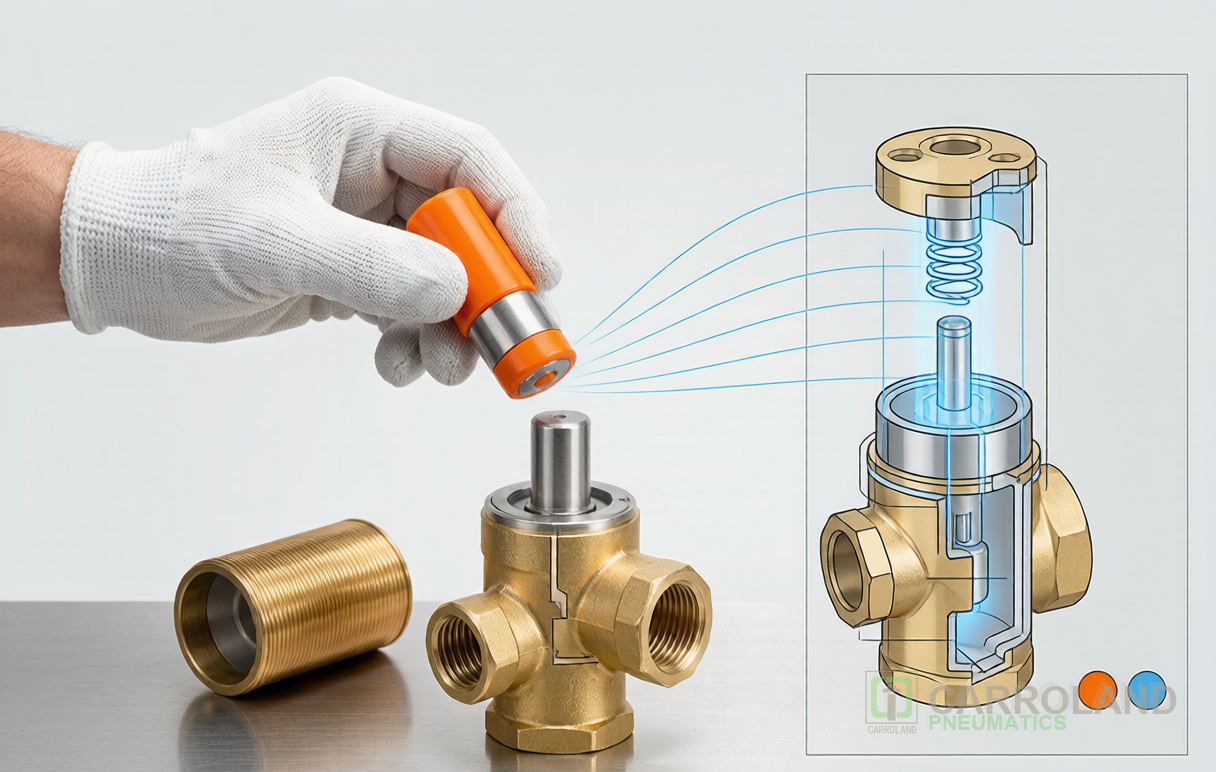
Inside every solenoid valve there is a ferromagnetic plunger that moves when the coil is energised. The coil generates an electromagnetic field; the field lifts the plunger against a return spring; the plunger opens the valve. A solenoid valve operating magnet (SVOM) replicates that electromagnetic lift without electricity. You remove the coil, place the magnet over the valve stem, and the plunger lifts mechanically.
The practical applications are wider than most technicians realise.
- Manual override during commissioning. A new line is plumbed in but the electrical cabinet is not yet commissioned. The magnet tool lets the pneumatic circuits be tested for leaks, direction and end-of-stroke feedback before the electrician arrives.
- Coil-failure bypass. A solenoid coil burns out — common in Indian summers where 24 VDC cabinets run at 35-40 °C ambient. Replacing the coil means a 30-60 minute production stop. Holding the valve open with the magnet keeps the line running while a replacement coil is sourced.
- Troubleshooting. If the magnet shifts the valve but the coil does not, the problem is electrical (coil, wiring, PLC output). If the magnet does not shift the valve, the problem is mechanical (jammed spool, blocked pilot exhaust, contamination). This one test separates the two failure domains in under a minute.
- Refrigerant recovery and evacuation. HVAC technicians use the magnet to hold refrigerant solenoid valves open during pump-down, dramatically speeding system evacuation.
Specifications of a typical solenoid valve magnet tool
Standard SVOM tools come in three bore sizes matched to the most common solenoid armature diameters. The specifications below are representative of commercially available 10/15/18 mm units.
| Parameter | 10 mm | 15 mm | 18 mm |
|---|---|---|---|
| Bore (fits armature up to) | 10 mm | 15 mm | 18 mm |
| Magnetic strength | 1 500 Gauss flux density | ||
| Pull force | 1.5 kg | ||
| Housing | High-strength ABS plastic | ||
| Magnet type | Axially polarised permanent magnet | ||
| Max operating temperature | +250 °C | ||
| Typical weight | 0.5 kg | ||
The rule of thumb is to select a bore equal to or larger than the valve stem diameter. A tool that is too small will not lift the plunger; a tool that is too large still works because the magnetic flux concentrates on the armature. Most plant maintenance engineers carry all three sizes.
The five-step solenoid valve diagnostic routine
When a solenoid valve stops working on an Indian compressed-air line, the magnet tool turns a 30-minute diagnostic into a 90-second one. The steps below are the field-proven sequence used across HVAC, water-treatment and pneumatic control work.
- Lock out and depressurise. Isolate the supply air at the FRL. Bleed downstream pressure through a manual ball valve. Verify zero energy with a gauge. Never skip this — Indian shop-floor audits routinely find solenoid valves wired live while pneumatic pressure is still on the actuator.
- Check the connector LED. Most DIN connectors on modern solenoid coils have an indicator LED. Lit means the PLC output card is sending signal; unlit means the fault is upstream.
- Apply the magnet tool. Remove the coil, place the magnet over the stem. Listen for the click. If the valve shifts and the actuator moves, the mechanical side is healthy.
- Measure coil resistance. With the coil removed, measure resistance across the terminals. A typical 24 VDC coil reads around 75 Ω. Open circuit (OL) means the coil is burnt out. Near-zero resistance means a short. Both mean replace the coil.
- Measure voltage at the coil under load. Reconnect the coil, energise the circuit, put the multimeter on the coil terminals. If the voltage is correct but the coil still does not click, the plunger is mechanically jammed — replace the valve.
India-specific failure modes on solenoid valves
Indian plants see three recurring solenoid-valve failure patterns that the magnet tool is unusually good at diagnosing.
- Voltage drop on long cable runs. A 24 VDC solenoid coil rated for 24 V will not shift if the cable run from the PLC cabinet drops voltage to 19-20 V at the coil. The magnet tool shifts the valve immediately, confirming the mechanical side is healthy.
- Heat-soaked coils in summer. Indian factory ambient hits 40-45 °C in summer. Solenoid coils rated for 35 °C continuous will fail prematurely. The magnet tool lets the line keep running while a heat-resistant coil is sourced.
- Contamination from unfiltered air. A factory running without an FRL or with a saturated filter element will pass particulate and oil aerosol into the solenoid valve, jamming the pilot stage. The magnet tool will not shift the valve in this case — a clear signal that the problem is mechanical and the valve body needs service.
Carroland’s role in the troubleshooting chain
Carroland supplies the solenoid valves, the FRL air-preparation chain that keeps them clean, and the documentation that an Indian maintenance team needs to keep both running. The Carroland pillar on solenoid valves and pneumatic valve selection for India covers the broader valve portfolio, including the 5/2 and 5/3-way valves that the magnet tool is most commonly used to override.
FAQ
Does a solenoid valve magnet tool work on every valve brand?
It works on virtually every normally-closed solenoid valve whose armature is ferromagnetic — which covers the vast majority of general-purpose valves used in compressed air, water, refrigeration and HVAC. Valves with latching coils, bistable designs or non-ferromagnetic armatures will not respond.
Can the magnet tool replace the coil permanently?
No. The magnet holds the valve in one position only — there is no return spring action as on an energised coil. The magnet is for diagnostic override, commissioning and emergency bypass, not continuous operation.
What is the safest way to use the magnet tool on a live system?
Always isolate electrical power before removing the coil. Confirm zero pressure at the valve. Place the magnet over the stem and listen for the click. Refit the coil before restoring power. Never leave the magnet on a valve that is supposed to be de-energised — it locks the valve open and defeats safety logic.
How much does a solenoid valve magnet tool cost in India?
A standard 10/15/18 mm set retails around INR 1 800-2 500 in India. The set pays for itself the first time it keeps a production line running while a replacement coil is sourced overnight.