Petrol Solenoid Valve Guide: 12V Fuel Shut-Off Selection
A petrol solenoid valve is the electrically operated valve that lets an engine control unit start, hold, or cut petrol flow with a signal instead of a lever. In Indian applications — generator sets, two-wheeler fuel lines, agricultural pump engines, and small industrial burners — the most common specification is a 12 V DC fuel shut-off solenoid, and most field failures trace back to electrical mismatch rather than mechanical wear.
For wider valve-selection context, start with our pneumatic valve and solenoid guide. Then compare flow-control choices in the solenoid valve selection guide and our actuator note on the butterfly valve pneumatic actuator solenoid valve combination.
Solenoid Coil Basics: Pull-In and Hold
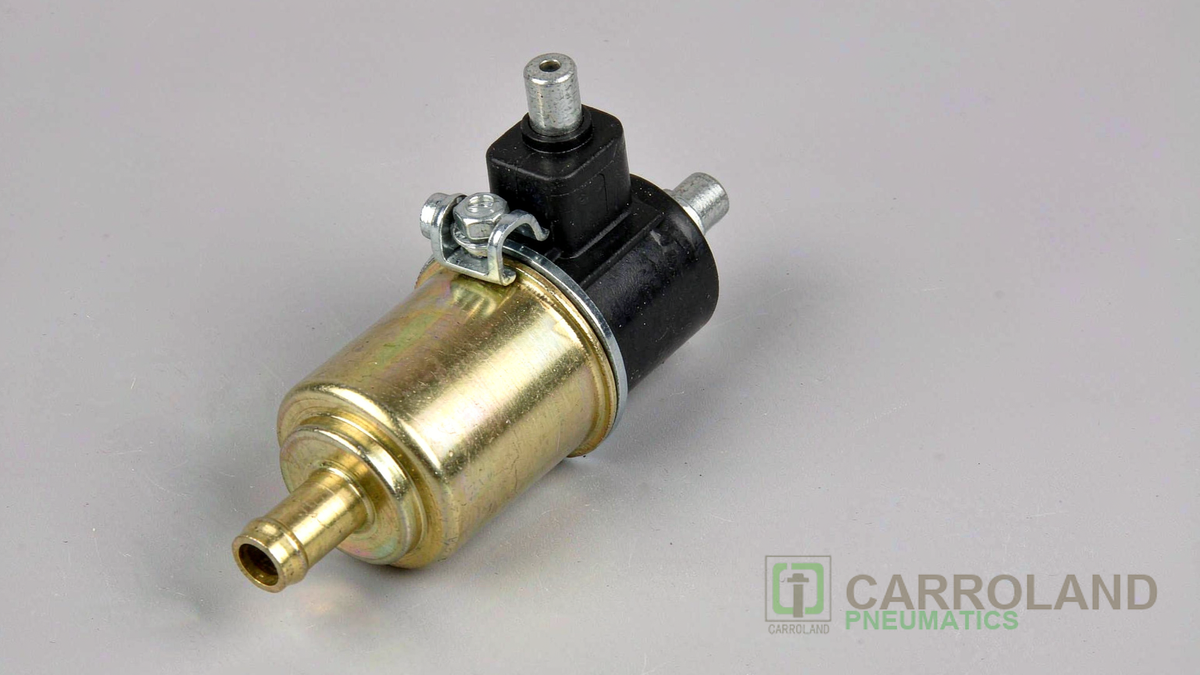
Every fuel shut-off unit is built around a solenoid coil with two electrical phases. At switch-on, the plunger must be pulled across an air gap, which takes a large inrush — a typical 12 V DC automotive-style unit draws a pickup current near 10 A. Once seated, a hold coil (or a reduced-duty winding) keeps it in place at roughly 1 A or less. Measured resistance reflects this split design: pull-in windings around 1 Ω, hold windings around 14 Ω, with many service manuals quoting a healthy total coil resistance of roughly 10–20 Ω for continuously rated units.
Direct Acting Solenoid Valve Behaviour in Fuel Lines
Petrol flow control uses a direct acting solenoid valve in most small-engine sizes: the plunger closes the orifice directly. The valve therefore works from zero pressure differential and reacts within about 0.1 seconds. A reference 12 V shut-off unit of the type fitted to generator and construction engines specifies a working stroke of 32 ± 1 mm, pull force of at least 100 N, an action time of ≤0.1 s, and an operating temperature span of −40 °C to 105 °C. Direct action matters for petrol because the vapour pressure and low viscosity leave no margin for pilot-stage lag.
Normally Closed Solenoid Valve Logic for Safety
Safety design favours the normally closed solenoid valve: energise to run, de-energise to shut. When power fails or the ignition switches off, a return spring blocks the fuel passage immediately — the same fail-safe logic used in gas train valves. A nc solenoid valve in the fuel line therefore requires power only while the engine runs, which keeps coil heating and battery drain low during standby.
Solenoid Valve Types and Where Petrol Versions Fit
Across the common solenoid valve types — direct acting, pilot operated, and semi-direct — petrol duty sits almost entirely in the direct-acting, normally closed family. Pilot operated solenoid valve designs need a minimum pressure differential to open the main orifice, which a gravity-fed petrol line may not supply. Understanding solenoid valve working phases (energise, pull in, hold, release) also explains why voltage matters: a 12 V system must deliver roughly 10–14 V at the coil terminals, because sustained supply below about 10 V or above 14 V degrades pull-in reliability and coil life.
| Parameter | Typical 12 V DC petrol shut-off value |
|---|---|
| Pickup (inrush) current | ≈10 A |
| Holding current | ≤1 A |
| Coil resistance | ≈1 Ω pull-in winding / ≈14 Ω hold winding |
| Action time | ≤0.1 s |
| Working stroke | 32 ± 1 mm |
| Ambient temperature | −40 °C to 105 °C |
Frequently Asked Questions
Why does my petrol solenoid valve click but not open?
The plunger is moving but flow is blocked. Check the supply voltage at the coil terminals under load (a 12 V system should read about 10–14 V), and inspect the orifice for varnish or debris from stale petrol. Then verify the pull-in winding resistance — a burnt pull-in winding will hum or click without producing full travel.
Can I use an AC water-valve solenoid on a petrol line?
No. Fuel duty requires media-compatible seals (typically FKM/NBR), a housing rated for the hazardous environment, and a normally closed direct-acting design. Water valves are usually pilot operated and their seals degrade in petrol.
How is a pneumatic solenoid valve different from a petrol solenoid valve?
A pneumatic solenoid valve pilots compressed air to actuators and handles 5–8 bar clean, dry air, while a petrol solenoid valve meters liquid fuel at low pressure with fuel-compatible sealing. Carroland Pneumatics (European Technology · China Manufacturing · Since 1992) manufactures pneumatic solenoid valves for automation lines; fuel-duty valves follow separate automotive standards. General coil physics references are collected on Wikipedia’s solenoid valve page.