
NFPA Pneumatic Cylinder Standards: Bores, Mounts and Pressure
NFPA pneumatic cylinder standards define the dimensional rules that make a cylinder built by one factory bolt directly onto a machine designed around another factory’s part. The acronym refers to the National Fluid Power Association, the United States fluid power standards body — not the fire-code organisation that shares the same letters. For Indian maintenance teams running mixed-brand machinery, understanding these standards is the fastest way to cut downtime during cylinder replacement.
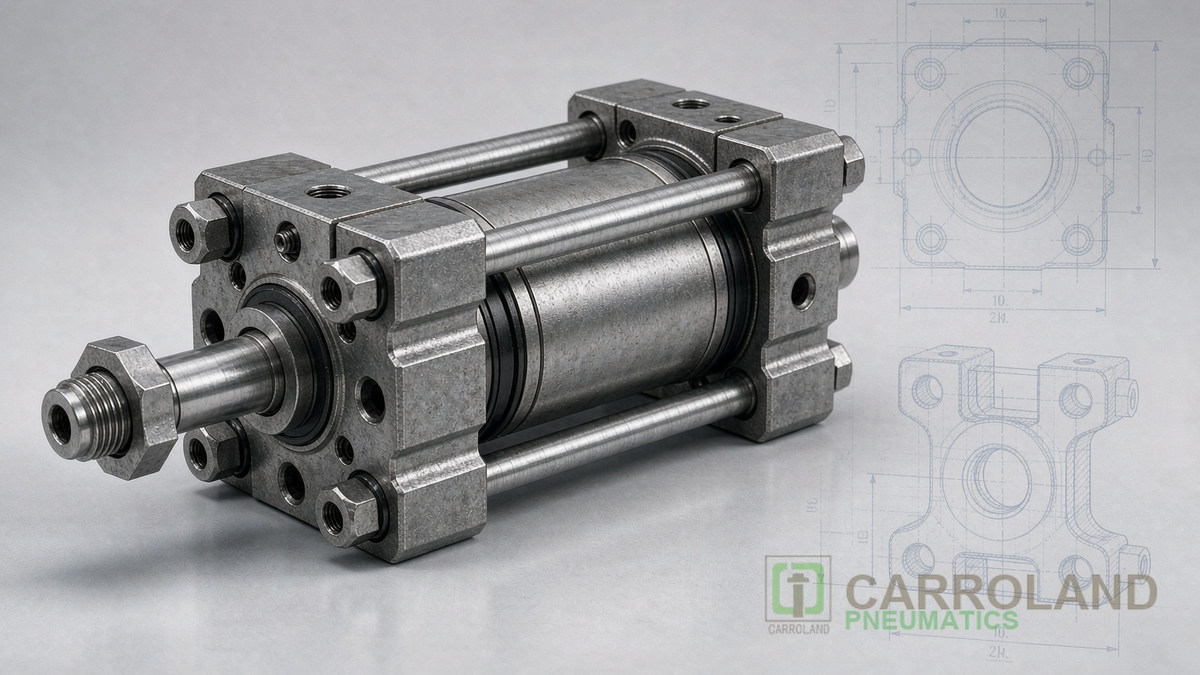
This guide follows the selection logic in our pneumatic cylinder guide; for automation behaviour questions, see automatic pneumatic cylinder operation and our sizing note on the 5 ton pneumatic cylinder class.
What NFPA Interchangeability Actually Fixes
An NFPA cylinder standard fixes bore diameter, rod diameter, mounting hole patterns, port locations and stroke length. If a cylinder is labelled NFPA, its mounting footprint and rod thread match another manufacturer’s NFPA unit of the same bore and mount style, even if internal seals or tube material differ. The practical value appears during repair: a worn cylinder on a conveyor line can be replaced without re-machining brackets or clevis pin holes.
Bore, Rod and Pressure Ranges in the Standards
Standard NFPA catalogues cover bores from 1-1/2 inch (38 mm) up to 14 inch (356 mm), with strokes commonly furnished up to 99 inches (2,515 mm). Standard pressure ratings reach 250 psi (17 bar) for air service. Rod diameters are sized at roughly one-quarter to one-third of the bore for typical push loads, with oversize rods available for side-loading or column-buckling conditions. These ranges matter to Indian buyers of pneumatic components because they let you match an inch-series machine with a locally available equivalent instead of importing the original brand unit.
Mounting Styles: the Codes Buyers Actually Use
NFPA documents roughly two dozen mounting styles; a typical published catalog such as Fabco-Air’s lists 21 configurations. The five you will meet most often are: MF1/MF2 rectangular head or cap flanges for rigid in-line mounting; MP1/MP2 fixed or detachable clevises for pivoting loads; MT1/MT2/MT4 trunnions for swinging applications; MS1/MS2 side lugs and angle mounts for panel mounting; and MX1/MX2/MX3 extended tie rods for multi-point fixture attachment. Always read the mount code from the full interchange part-number string — two cylinders with identical bore and stroke remain physically incompatible if the mount differs.
Cushioning and Double Acting Air Cylinder Behaviour
Virtually all NFPA industrial units are double acting air cylinder designs with adjustable cushion options. Fixed cushion orifices decelerate the load without tuning; adjustable cushions let a technician match deceleration to speed and mass. Seal-bumper options can absorb up to 80% of the end-of-stroke load, with the remaining 20% handled by the cushion — a useful split for high-cycle Indian packaging lines where noise and shock drive maintenance cost. Single acting air cylinder versions exist in the wider market but are uncommon in NFPA tie-rod format.
Specifying with Pneumatic System Components in Mind
When you write a purchase specification, list the NFPA frame size, bore, rod diameter, mount code, port size and rod-end style as one string, then attach your plant’s requirements for pneumatic system components around it — valves, FRL units and pneumatic spring-return accessories where fail-safe behaviour is needed. Carroland Pneumatics manufactures to published inch and metric interfaces (European Technology · China Manufacturing · Since 1992) and supports Indian OEMs with dimension sheets and test reports for cross-brand maintenance planning.
| Attribute | Typical NFPA standard range |
|---|---|
| Bore diameter | 1-1/2 in (38 mm) to 14 in (356 mm) |
| Stroke length | Up to 99 in (2,515 mm) standard catalogues |
| Maximum air pressure | 250 psi (17 bar) |
| Mounting styles | About 21 published configurations (MF/MP/MT/MS/MX series) |
| Stroke tolerance | ±1/16 in baseline; 1/8 in increments standard |
Frequently Asked Questions
Does NFPA mean the cylinder meets a performance standard?
No. NFPA cylinder standards are dimensional interchangeability standards — they fix bore, rod, mounts, ports and stroke so different manufacturers’ units are physically interchangeable. Seal design, tube material and internal construction remain manufacturer-specific.
Can I replace a non-NFPA imported cylinder with an NFPA unit?
Only if the original was built to NFPA dimensions. Measure the bore, rod diameter, mounting hole pattern and port spacing, then compare against an NFPA dimension table. If they match, a same-spec unit bolts in without bracket changes.
Where is the NFPA standard documented?
Dimensional interchange data is published by the National Fluid Power Association and reproduced in manufacturer catalogs; overview references such as Wikipedia’s pneumatic cylinder entry cover the family context. Carroland’s India cylinder guide maps inch-series needs to metric ISO equivalents.